Skip to content

Connected Cyber‑Secure Autonomous Electric Navigation

NEAC Industry is an innovative french company founded in 2021, specializing in engineering and applied research for the maritime and inland waterway sectors. We develop automated and autonomous navigation systems designed to adapt to complex maritime and river environments and to meet the operational constraints of these industries. Our expertise also includes securing communications between onboard equipment and networks, ensuring data integrity and the reliability of navigation decisions taken on board. These innovative technologies enhance the safety and security of navigation operations and support the transition toward smarter, and more sustainable maritime and river mobility.

We also specialize in the design, integration, and maintenance of embedded electronic systems and subsystems. Our areas of expertise range from research to solution design, from technical studies to implementation, including the maintenance of electrical and electronic equipment, radionavigation systems, radiodetection systems, internal and external communication systems, as well as embedded computer systems.

The evolution of technologies also leads us to work on architectures integrating automation systems, supervision tools, and industrial networks.

Areas of Our Activity

Our R & D approach relies on the integration of information and operational technologies.

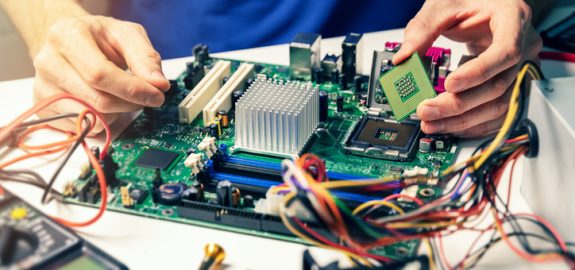
installing computer hardware - technician install CPU on motherboard

Embedded Systems

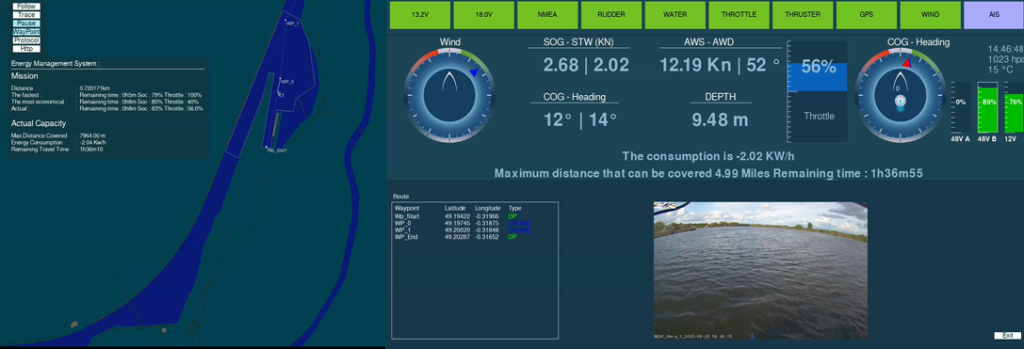
The complete design of equipment architecture, including the development of proprietary hardware tailored to autonomous navigation systems. The integration of sensors, actuators, computing units, and communication modules, ensuring system robustness, reliability, and responsiveness. The development of human–machine interfaces for the Remote Command Center, supporting control‑command piloting and real‑time supervision of a teleoperated vessel. An ergonomic HMI study is carry out to optimize information flows and facilitate the vessel’s operational monitoring.

A 3D rendering of social network business with neural connections floating

Multisensor Data Fusion

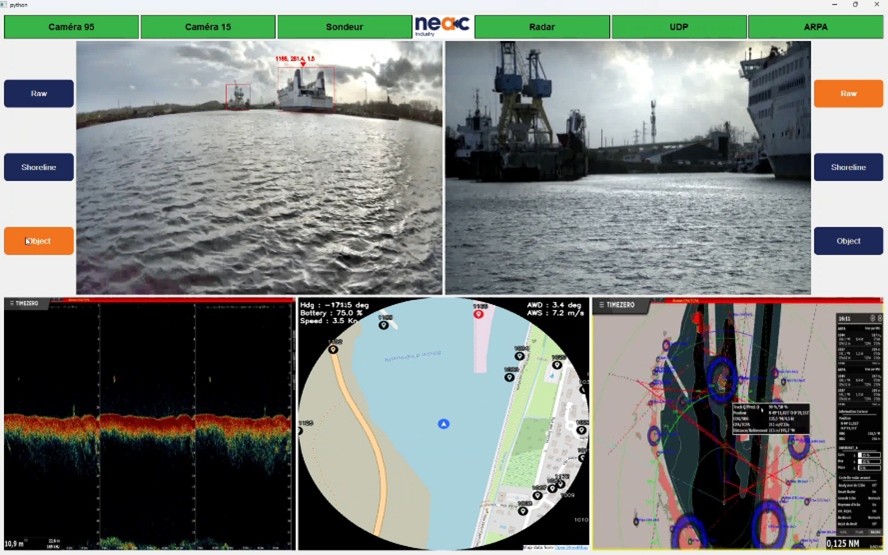
Improving situational awareness and strengthening the monitoring of the dynamic environment are essential to ensuring precise navigation. Real‑time data fusion issue from multiple onboard sensors (radar, camera, RTK, multibeam and side-scan sounder, AIS, etc.) enables comprehensive perception. Image processing, combined with object‑detection algorithms, makes it possible to identify obstacles, anticipate critical situations, and optimize trajectories based on real conditions. These solutions enhance autonomous decision‑making and reinforce navigation safety.

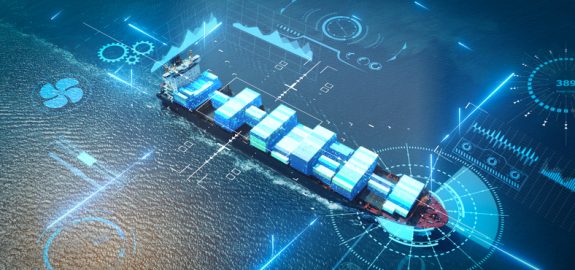
AI technology. Global Logistics international delivery concept, World map logistic and supply chain network distribution container Ship running for export import to customs cean concept technology

Trajectory Planning

Implementation of speed and position control laws, validated both in simulation and in real‑world conditions. These laws rely on a dynamic model of the vessel, incorporating its physical, hydrodynamic, and behavioral characteristics in a marine environment. The motion‑planning algorithm continuously computes optimal trajectories based on mission objectives and navigation conditions. An obstacle‑avoidance function is integrated into the system, enabling dynamic trajectory adaptation.

data and technology.

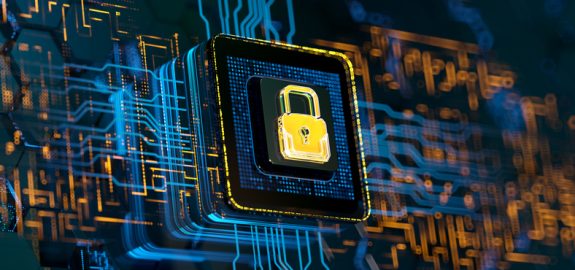
Maritime Cybersecurity

Based on artificial intelligence, the design of resilient cybersecurity solutions is capable of detecting cyberattacks, ensuring end‑to‑end integrity of digital connections on board a vessel. Carry out navigational trials, the equipped onboard systems capture information circulating within the vessel’s communication networks, allowing data to be collected for model training as well as for verifying the solution’s performance to ensure safety.

Predictive Energy Management

Managing and optimizing the remaining electrical energy on board is essential to ensuring the propulsion of a fully electric vessel throughout its journey. Using an algorithmic system, navigation history data is fused with real‑time conditions (wind, current, speed, etc.) and external parameters. This processing makes it possible to suggest, in real time, trajectory scenarios adapted to the available energy level: the most energy‑efficient route, the fastest route, or the route that guarantees reaching a charging point or battery replacement location.

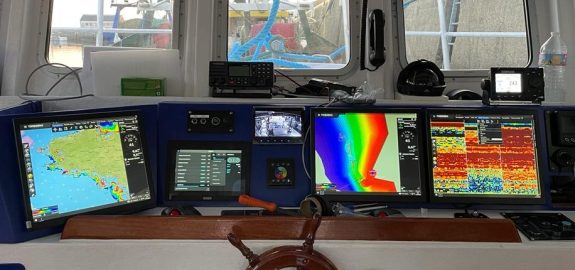
Bathymetrie mapping

Data Acquisition

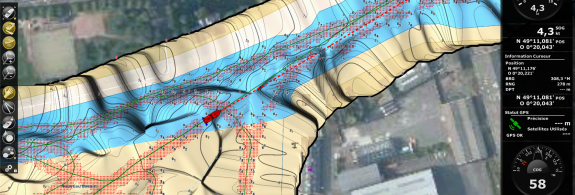
Recording vital navigation data makes it possible to analyze the vessel’s behavior according to changing parameters (wind, current, speed, etc.). The acquisition chain covers sensor selection, data‑stream synchronization, and real‑time processing. These data are then used for scenario simulation and model validation. High‑precision bathymetric measurements improve understanding of the seabed, thereby enhancing pilot awareness and overall navigation safety.

Our Researches and Experimentations

Autonomous and Remote - Control Navigation

The increasing automation of inland waterway transport (IWT) represents a significant vector of innovation, enhancing both efficiency and safety through the adoption of advanced technologies and remote‑operation solutions. These transformations reduce crew requirements, operational costs and emissions, thereby fostering a more sustainable and efficient transportation network. Ongoing development focuses on advancing remote‑control and autonomous navigation (ASPEDSA) relying on system and sensor integration, analytical data processing, control‑system algorithms, real-time decision-making, and remote‑operation interfaces for remote operation centre (ROC).

Significant progress has been made in implementing a multi‑sensor data‑fusion system (cameras, radar, RTK, Lidar, etc.) for situational awareness.

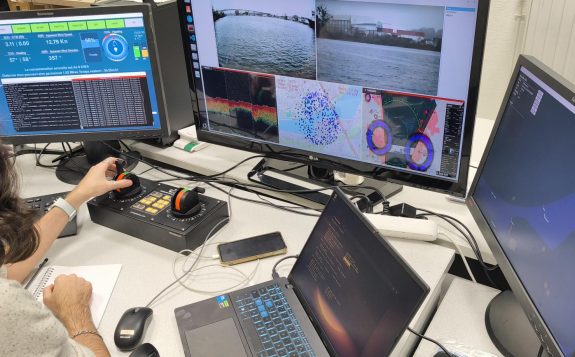
This system transforms raw information streams into a clear and consolidated representation of the precise vessel’s positioning and environment. Live multi‑sensor data is streamed to the ROC and displayed on multiple monitors for the remote operator. On‑board cameras with different focal lengths are used for object‑detection algorithms based on Machine Learning helps for the identification of dynamic objects around the vessel for collision avoidance.

By enhancing data fusion, obstacles recognition and improving human–machine interface (HMI), operators gain a better understanding of the situation. Real‑life experiments underscore the critical role of data monitoring, robust connectivity, and communication redundancy in ensuring strengthened safety and operational efficiency in inland shipping.

Remote control

Unmanned Surface Vessel (USV)

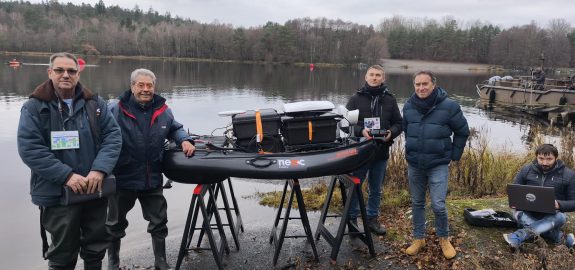
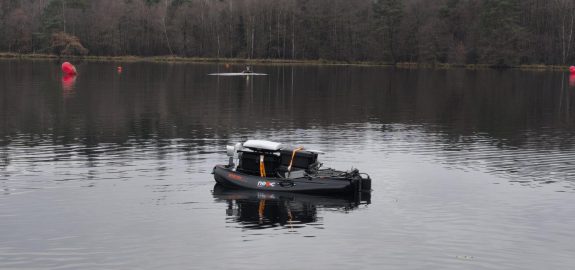
ROCO (Remote Operation Control Observation) is a remotely operated river‑drone laboratory designed for advanced data collection, environmental monitoring, and surveillance operations. ROCO USV serves as a robust transport platform capable of carrying up to 150 kg of payload (battery included) and is powered by a 1.5 kW electric thruster, enabling silent navigation for up to 20 hours when required.

USV integrates multiple sensors and systems to gather and process mission‑critical, high‑precision data displayed in real time, which is subsequently transmitted to decision centers via the Eutelsat OneWeb satellite network and other communication solutions resilient to weak or jammed signals. The system supports operations such as bathymetric seabed scanning using multibeam echosounder and surface‑level object detection using infrared, thermal, or daytime type of cameras, enabling mission‑focused reconnaissance ahead of deployment.

ROCO 3
ROCO 1

Our Projects

FOREMAST

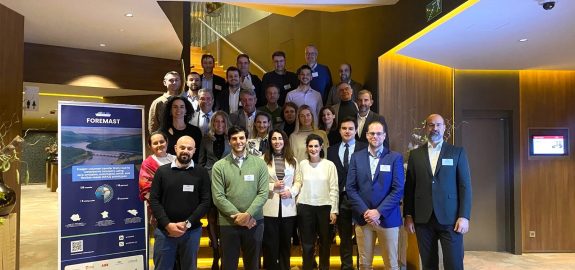
FOREMAST aims to reshape urban and coastal cargo transport into a more sustainable, efficient, and congestion‑free system by developing Small, Flexible, Automated, Zero‑emission (SFAZ) vessels that improve accessibility and seamlessly integrate with existing infrastructure. NEAC, leads Living Lab Caen, France developping advanced smart‑navigation solutions focused on automated and remotely operated sailing. This project has received funding from the Horizon Europe framework programme  under Grant Agreement No 101138261.

foremast_kom_horizontal

CYBER-NEAC

Cyber‑NEAC is designed as a response to the vulnerabilities, cyberthreats, and cyberattacks impacting the maritime sector. Its goal is to deliver a cybersecurity solution capable of protecting ship communication architectures and adaptable to a wide range of vessels. The system is intended to employ AI for detecting data‑integrity anomalies and enhancing the security of navigation. Collaboration innovative project has received co-funding from the Normandy Region and the European Regional Development Fund (ERDF).

CyberNEAc1

WISTAR

WISTAR Photo

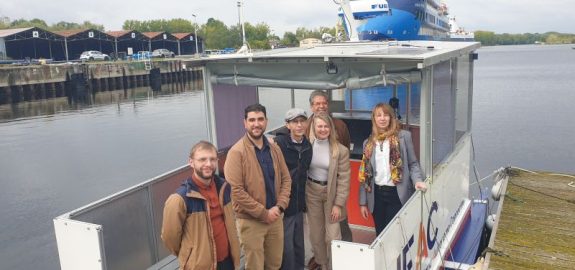
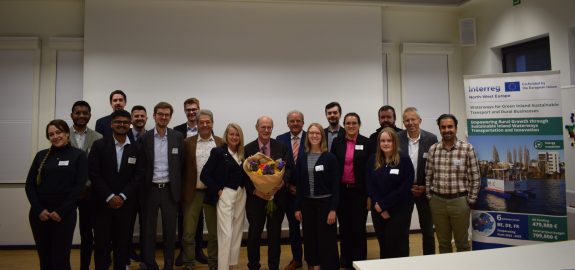
WISTAR is promoting energy‑efficient and sustainable inland waterway transportation by deploying shallow‑waterway e‑ships equipped with innovative technologies to reduce carbon emissions, monitor energy use, enable smart battery management, apply predictive metrics to improve energy efficiency, and provide real‑time tracking and data monitoring for small multimodal rural businesses in the Normandy (FR), the Ruhr area (DE), and the Walloon Region (BE). WISTAR receives co-funding from the Interreg North-West Europe. 

Our Services

Service Marine

Sail with confidence, powered by our leading maritime and river expertise. We provide end‑to‑end solutions covering engineering and project development, system design and integration, advanced embedded electronics, software, electrical systems, and cybersecurity consulting.

We support our clients throughout the entire equipment lifecycle, from needs analysis and technical studies to installation, maintenance and operational support. Our organisation is built on a team of technicians qualified and certified by major international manufacturers, ensuring interventions that comply with current standards.

We work on a wide range of vessel types — fishing, defence, pleasure craft and inland waterways — for new builds, modernisation projects or refurbishment of existing units. We also carry out services for shore‑based infrastructure such as ports, harbourmaster’s offices and specialised facilities.

Through our expertise, we contribute to the reliability, safety and longevity of onboard systems while supporting technological evolution and fleet modernisation.

Our teams deliver seamless installation of onboard electronics, navigation systems, electrical power generation, and radio communication systems — ensuring vessels built to perform, evolve, and innovate. 

We deliver a complete embedded‑electronics solution for the dronization of vessels (USVs), including multisensor integration, onboard computing, communications relays and operator interfaces, as well as measures to reduce vulnerability to jamming and electronic attacks, for missions such as maritime surveillance (Intelligence, Surveillance, and Reconnaissance) ISR of infrastructure, riverbanks, coastlines inspection, and mine countermeasures.

– Embedded Electronics Systems
–  Navigation / Communication systems
– Vessel Automation

–  Electric / Hybrid Propulsion
– Battery Systems / Safety Management
– Power Distribution Cabinet

– Electrical Architecture
– Electrical Wiring
– Electrical Control & Distrubution Cabinet

– Maintenance 
– Vessel Retrofit 
– Vessel Dronization

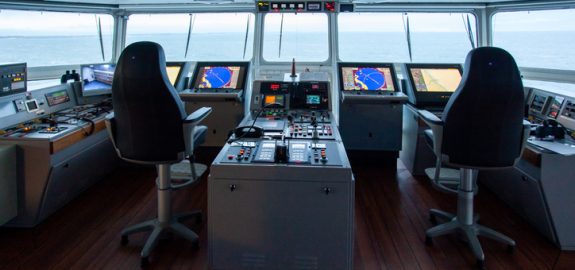
An inside look of the control centre of a superyacht on the sea
P'Tit Piak-2

CONTACT US

Request information

MAKE AN APPOINTEMENT

HEAD OFFICE

NORLANDA

117 Cours Caffarelli

14000 Caen – France

Tel: +33 6 77 13 01 03

E-mail: contact@neac-industry.com

SERVICE MARINE 

16 rue Maréchal Foch

50550 Saint-Vaast-la-Hougue – France

Tel: +33 6 24 28 58 34

E-mail: commercial@neac-industry.com